




Abstract
Introduction
Atrial fibrillation (AF) and chronic obstructive lung disease (COPD) are the most common cardiac arrythmia and chronic lung condition worldwide. Exacerbations of COPD can be associated with acute hypercapnic respiratory failure (AHRF). It is unclear if new-onset AF (NOAF) during hospitalisation with AHRF influences long-term outcomes.
Methods
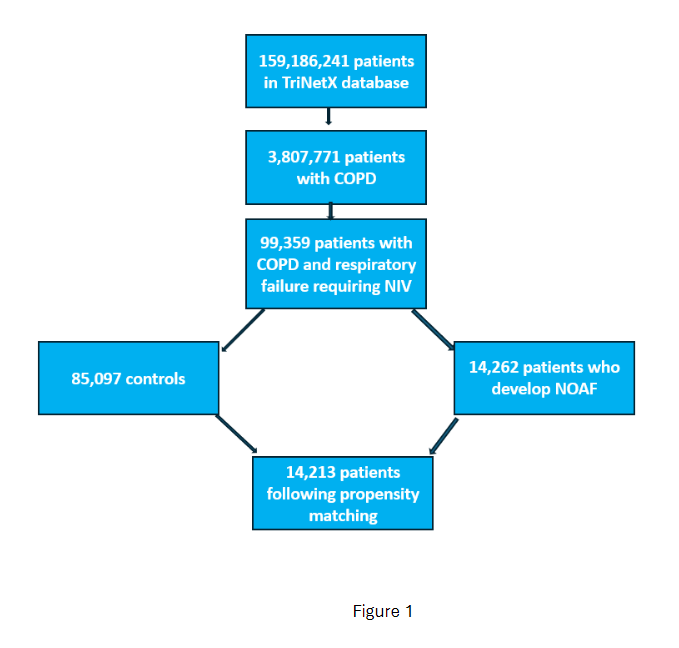
We conducted a retrospective cohort study using TriNetX, a global federated health research network. Patients≥18 years old hospitalised with a known diagnosis of COPD and new AHRF requiring non-invasive ventilation (NIV) were divided into two cohorts based on the development of NOAF within 7 days of AHRF. After propensity score matching (1:1), there was a total of 14 213 patients in each group. Outcomes were recorded at one-year from the index admission to hospital. The outcomes of interest were all-cause death, re-admission, stroke, myocardial infarction, composite embolic endpoint (acquired absence of limb, acute vascular disorders of intestine, acute and critical limb ischemia) and dementia.
Results
At 12 months following hospitalisation with AHRF requiring NIV, patients who developed NOAF during their admission had a statistically higher rate of death (HR 1.26 [1.21–1.32]), re-admission (HR 1.07 [1.04–1.10]), stroke (HR 1.46 [1.27–1.68]), myocardial infarction (HR 1.41 [1.31–1.51]) and the composite embolic endpoint (HR 1.35 [1.22–1.51]). There was no statistically significant difference in rates of dementia (HR 1.08 [0.97–1.21]).
Conclusion
The development of NOAF in AHRF requiring NIV is associated with a higher risk of mortality, readmission, stroke, myocardial infarction, composite embolism at one-year. NOAF functions an independent indicator of poor outcomes in such patients.