




Abstract
Background
Individuals with bronchiectasis have an increased risk of exacerbation by coronavirus 2019 (COVID-19), even after recovery from COVID-19. However, the impact of COVID-19 severity on severe exacerbation and mortality remains uncertain in this population.
Methods
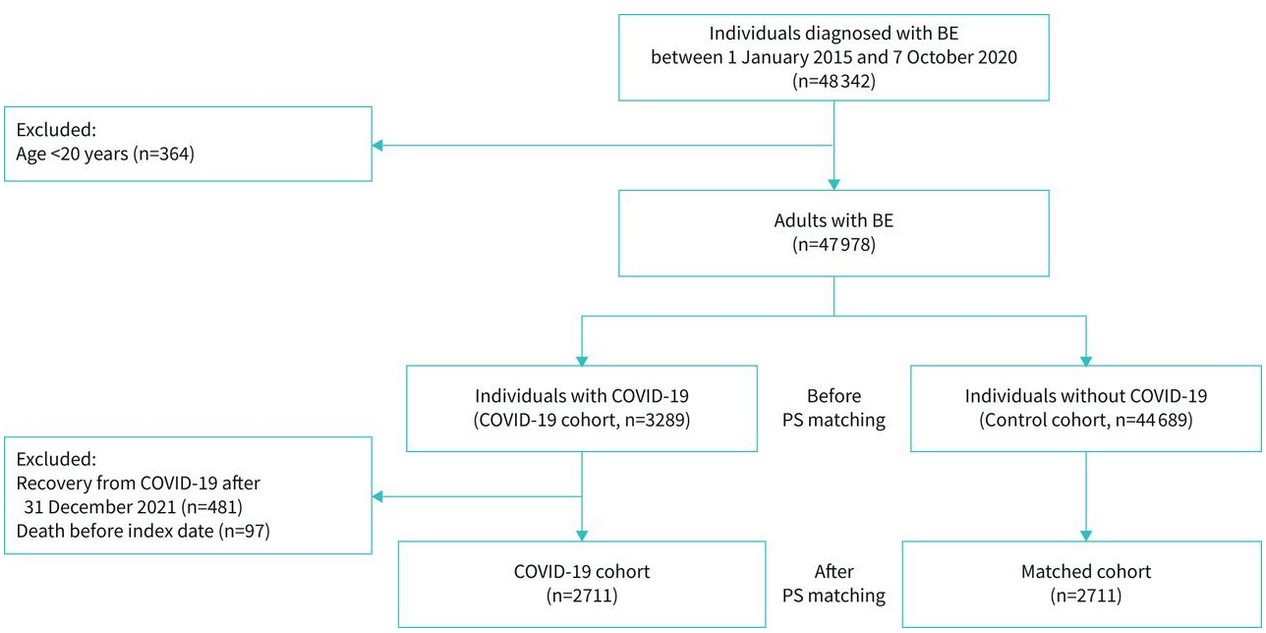
We enrolled 48 342 individuals diagnosed with bronchiectasis between 1 January 2015 and 7 October 2020 from Korea National Health Insurance Service. Of these individuals, 2711 with bronchiectasis were identified as also having recovered from COVID-19. A COVID-19 and matched cohort (n=2711 for both) were established after 1:1 propensity matching. The exposure was COVID-19 (non-severe and severe), and outcomes were severe exacerbation of bronchiectasis and death following the COVID-19 recovery date.
Results
During a median follow-up of 70 days (interquartile range (IQR), 31–216 days) for severe exacerbation and a median of 71 days (IQR, 32–129 days) for death, including 14 days of recovery time after COVID-19, the incidence of severe exacerbation and death were 402.2/10 000 person-years and 342.9/10 000 person-years in the COVID-19 cohort. Although the COVID-19 cohort did not show higher risk of severe exacerbation, the cohort exhibited a significantly higher risk of mortality (adjusted hazard ratio (aHR) 1.46, 95% confidence interval (CI) 1.06–2.01) compared with the matched cohort. In a stratified analysis, the severe COVID-19 cohort showed a significantly higher risk of severe exacerbation (aHR 2.38, 95% CI 1.25–4.51) and mortality (aHR 2.99, 95% CI 2.08–4.28) compared with the matched cohort.
Conclusion
The risk of severe exacerbation and mortality in individuals with bronchiectasis was increased after recovery from COVID-19, particularly in those who experienced severe COVID-19.