




Abstract
Aim
This study attempts to explore the clinical differences of sepsis caused by respiratory viruses and bacteria, and to search for risk factors for mortality in viral sepsis.
Methods
This single-centre, retrospective cohort study enrolled patients hospitalised at our medical intensive care unit (ICU) from October 2020 to January 2024 who were diagnosed with pneumonia and sepsis. The primary and secondary pathogens were identified with comprehensive aetiological tests. The baseline clinical information, biochemical tests, treatments and clinical outcomes were collected.
Results
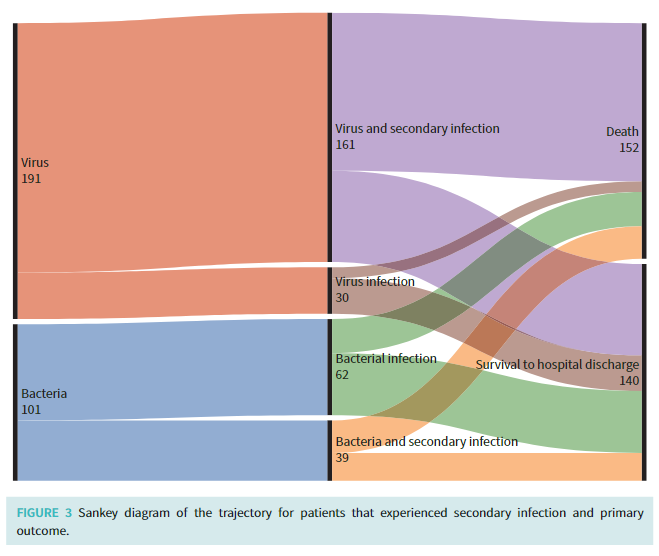
This study included 292 patients, comprising 191 with viral sepsis and 101 with bacterial sepsis. Compared with the bacterial sepsis group, patients with respiratory viral sepsis had lower oxygenation index levels upon ICU admission, higher proportions of acute respiratory distress syndrome (85% versus 44%; p<0.001), secondary infection (84% versus 39%; p<0.001) and higher ICU mortality (57% versus 43%; p=0.018). After adjustment, viral sepsis patients had an odds ratio of 2.26 (95% CI 1.26–4.07) for ICU mortality. Risk factors for ICU mortality in viral sepsis included age, sequential organ failure assessment score, secondary infection, immunocompromised status and coronary heart disease. The subgroup analysis showed that secondary infection in viral sepsis contributed to a poorer clinical outcome.
Conclusions
ICU patients with respiratory viral sepsis presented a higher incidence of unfavourable outcome, which may partially be attributed to secondary infections.